Water damage drying
Water in the same room again? Start the clock and write it down
$100 off your first job, credited when it is booked.
A pipe, a sewer line or a storm has soaked the room again. Call now, because wet materials dried within a day or two often never grow mold. Tell us the hour it started and what you think caused it, and we help you book drying, then the record.
- 1Dates of earlier water
- 2Where the water came from
- 3Who was told
- 4What was done
We help you get the drying booked now and a mold assessment after if anything stays wet, from separate New York companies.
The Yonkers record-first promise
- Calling or writing to us is free and binds you to nothing.
- We ask about the building's flood record before anything else.
- The company that assesses will not be the one that removes.
- Your $100 credit follows the written offer terms, word for word.
Each contractor you hire works for you under your own agreement with them.
Mold Removal Yonkers, (315) 640-3590
Read the termsQuestions
Questions to settle before drying starts
1How quickly do I have to start drying?
EPA gives 24 to 48 hours as the window in which mold often will not take hold. Phone as soon as water shows up, and tell us when it began.
2Do I need an assessment before drying?
Not when the water is fresh and no mold is showing. If growth is visible and covers more than about ten square feet, the assessor comes first.
3What if the same room floods every spring?
Keep a dated log of each event with photos. A repeat pattern is exactly what an assessor needs, and a landlord needs to hear it in writing.
4Can I dry the room myself?
Small spills, yes. EPA advises drying wet materials fast and watching humidity. For soaked walls, floors or sewer water, ask for a company with proper equipment and readings.
5How will I know the room is dry?
A surface can feel dry while the wall behind it still holds water, so ask for a closing reading too.
6What if mold shows up after the drying?
Tell us and book the assessor. Drying and mold work are separate jobs, and the second one needs its own plan.
7Should I move furniture out of the room?
Yes, if the water was clean and you can lift safely. If sewage or an electrical outlet is involved, stay out and let the drying company handle it. EPA's advice covers belongings as well as building materials, so photograph wet items before you move them.
The file
Four questions before the air movers run
- 1
Dates of earlier water
Note the hour the water arrived. The 24 to 48 hour window EPA describes starts there, and a repeat event starts a new clock.
- 2
Where the water came from
Clean pipe water, sewer water and runoff call for different handling. Tell the drying company what you think it was, and say if you are unsure.
- 3
Who was told
Message the landlord or building manager right away, in writing. A dated message is part of the record the next assessor will want.
- 4
What was done
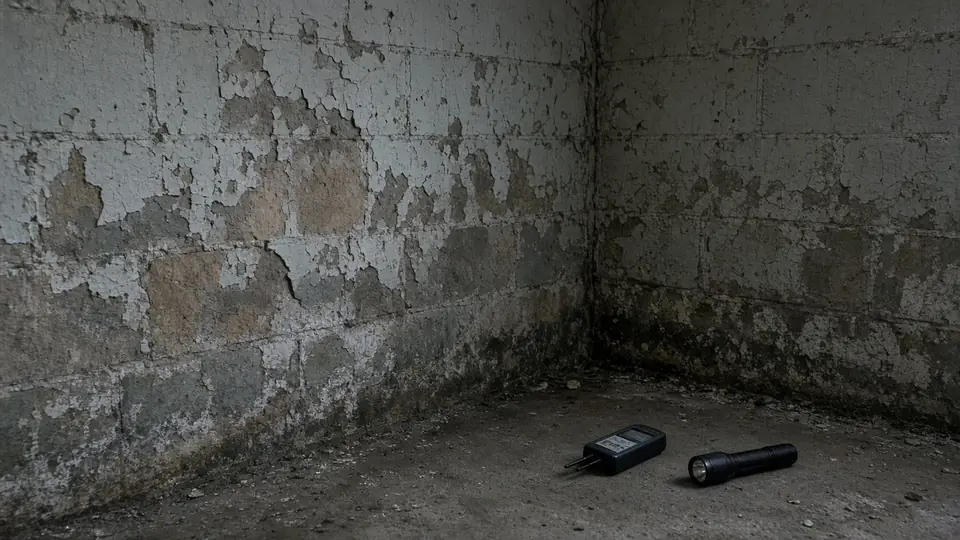
Ask for a first and a last moisture reading. Together they show the materials really got dry.
The drawing
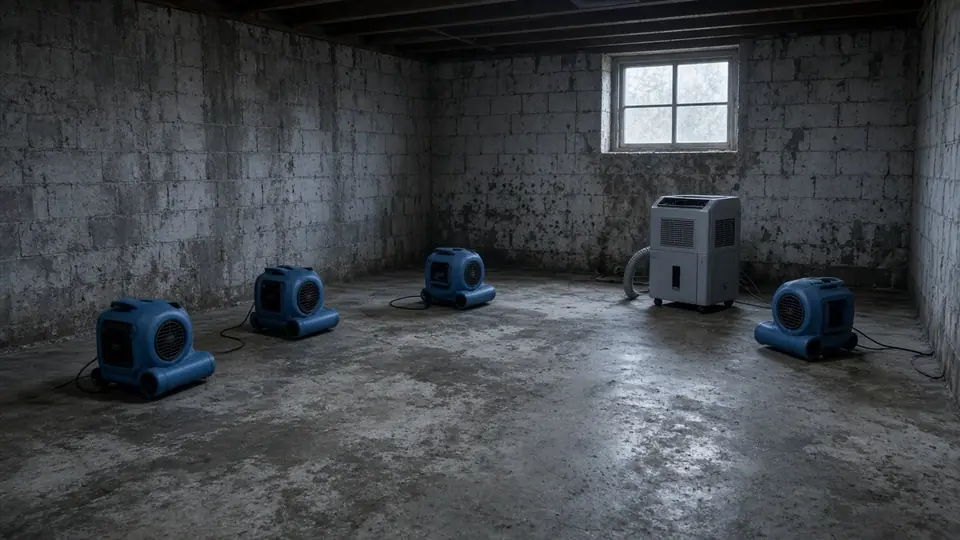
How wet materials get dried
- 1Air moversFans push air across wet surfaces so moisture can leave them.
- 2DehumidifierIt pulls the moisture out of the air so surfaces keep drying.
- 3MeterReadings show when a wall or floor is dry, not just dry to the touch.
Signs
Signs the water is still in the building
- Wet floors or baseboards in the last two daysThis is the window for drying. Past it, ask whether an assessor should look too.
- A backed-up sewer lineThe state Health Department lists a sewer backup among the common causes of household moisture.
- A damp basement with no dehumidifierIt is another cause the state names. Drying the room and fixing the source go together.
- Carpet that stays dampCarpet and padding can keep water long after the top feels dry.
- The same room wet a second timeWrite down both dates. A repeat is a clue about the building, not bad luck.
Scope
What the drying covers
- Removing standing waterPumps or wet vacuums take off what you can see.
- Opening wet materialsBaseboards or wall sections may be opened so damp does not stay trapped.
- Air movers and dehumidifiersEquipment runs until readings show the materials are dry.
- Moisture readingsMeters track progress from the first visit to the last.
- A look for signs of growthIf mold is already showing, the next step is an assessment, not more drying.
Run of work
How the drying runs
- Stop the sourceShut off the supply for a pipe leak. If sewer water is rising or water touches an outlet, stay out of the room and phone the drying company and an electrician.
- Record the time and the roomTake dated photos and write the hour you noticed.
- Book the dryingTell us what you see and when it began, and we start the booking.
- Check the readingsAsk for the final numbers. If growth appears, book the assessor.
Where you are
Four steps, in this order
Fresh, clean water changes the order: dry the room first. For mold, follow the order below.
01Get the building's record
Write down the day it came in and how deep.
02Book the assessment
If anything grew, book the assessment next.
03A different company does the work
Drying is its own job, done by its own company.
04Clearance after the work
Ask for moisture readings once the room is dry.
The first two days after the water
You cannot undo the water, but you can shorten how long things stay wet. For a pipe, shut off the supply, move what you can out of the room and photograph everything. If sewage came up, keep children and pets well away from it, and say so on your first call.
Then call. If you are past the first two days, say so plainly, because the next step may be an assessment instead of drying.
Why a repeat soaking needs more than a fan
When the same room gets wet twice, the second event is a clue. In Yonkers the water may come from a pipe, a brook behind the house or an old sewer line.
You do not need to name the source yourself. Write down each date and what you saw, and send it to us. The pattern helps whoever looks next.
When mold is already growing
If you can see growth, drying alone is not enough. Past about ten square feet, New York rules require an assessor's plan and a separate remediator.
On the form, pick "not sure" and describe the room. We tell you whether to book drying, the assessment or both.
Keeping the room dry afterward
EPA suggests keeping indoor humidity under 60 percent, and between 30 and 50 percent is best. A cheap humidity meter from a hardware store will tell you where you are.
If the number climbs again with no new leak, write down the date and ask your landlord or an assessor why.
What to tell the drying company when you call
Say when the water arrived, what you think it was, and which rooms and floors are wet. Mention carpet, padding, drywall and anything stored on the floor. Say if the room is a basement with no windows.
Ask when the first reading will happen, how long the equipment is likely to run, and how the company will decide it is finished. Ask what it will do if it sees mold. Ask it to list in writing what it will dry and what it will leave, and to call you before it adds work. If you carry insurance, ask your insurer what paperwork it wants before you sign. Then send us your notes, so the record starts with the first call.
Paper
The paper to ask for after drying
- Dated photosThey show the room before anything was moved.
- Start and end readingsThey show the materials reached dry.
- Your message to the landlordIt proves you reported the water, and when.
- The invoice and equipment logThey show how long equipment ran.
Price
What moves the price of drying
- How many rooms got wet
- How long the materials were wet before drying began
- What the floors and walls are made of
- How many days of equipment the readings call for
- Whether walls or flooring must be opened
- Whether the water source is still running
Guides
Guides that go with drying
The Ten-Year Flood Form
The county form that records ten years of flooding.
The Two-Day Window After a Leak
What to do in the first hour after water.
Renting With Mold
What a New York renter can ask for, in order.
$100 off your first job, credited when it is booked.