File: Yonkers
Yonkers mold help that begins with what your building has been through
Basement near the Saw Mill or Nepperhan? You get $100 off your first job in Yonkers, credited by us after the booking is made.
If water keeps finding its way into your Yonkers basement or apartment, start with the building's record, then book the mold assessment. We help you line up the assessment, the cleanup and the drying from separate New York companies.
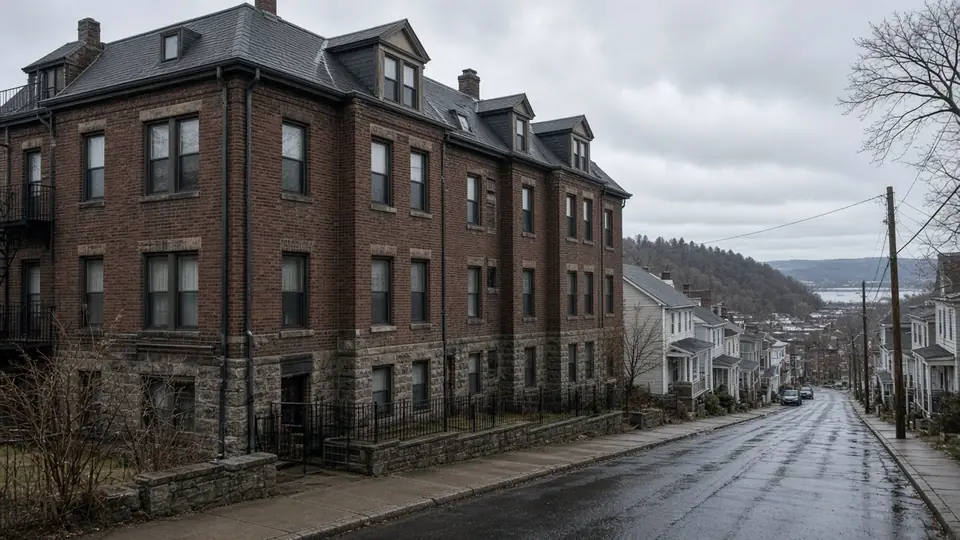
We help you get the mold assessment booked first and the cleanup or drying after, from separate New York companies, starting with what this building has been through.
The Yonkers record-first promise
- Calling or writing to us is free and binds you to nothing.
- We ask about the building's flood record before anything else.
- The company that assesses will not be the one that removes.
- Your $100 credit follows the written offer terms, word for word.
Each contractor you hire works for you under your own agreement with them.
Mold Removal Yonkers, (315) 640-3590
Read the termsYour water
Your water in Yonkers
The city's own list of flood-damaged properties names the Saw Mill (Nepperhan) valley, Tibbetts Brook and the Bronx River valley as well as the Hudson. Two of those waterways were buried, so ask what runs under or beside your building.
Yonkers has about 85,000 homes, and 27 percent were built before 1940. Renters occupy 54 percent of occupied homes, and over 22,000 units are in large buildings of 50 units or more.
Questions
Short answers for Yonkers before you call anyone
1Does Yonkers publish a list of flooded buildings I can check?
The city's repetitive loss action names streets such as Palmer Road, Nepperhan Avenue and Clunie Avenue, and the county plan names whole valleys. Those are streets and areas, not a record for one building. The record for your address has to come from the owner, so ask for it.
2Should I book the assessor or the cleanup company first in Yonkers?
The assessor. For a job over ten square feet of mold, the state Labor Department says a remediator cannot work on a project without an assessment and must obtain the assessor's plan before site preparation begins. Booking the assessor first also makes sense because the plan is what the cleanup follows.
3I rent a Yonkers apartment with mold. Can the owner just paint over it?
EPA advises against painting or caulking moldy surfaces: clean and dry first, since paint over mold tends to peel. Ask the owner in writing what caused the damp and who looked at it.
4Is the Hudson why my Yonkers basement gets wet?
Not necessarily. The city's list names the Hudson alongside the Saw Mill valley and Tibbetts Brook, and it describes the Ashburton Avenue sewer as an old system with significant infiltration. Which water reached you decides what the assessor looks for, so write down what you saw.
5Why do you keep saying a separate company does the cleanup?
State law requires it. Under section 936, whoever assesses a property may not also remediate it, so the person judging the job is not the person paid to do it.
Chapter 581
What the ten-year history form means in Yonkers
Chapter 581 is a county law, so it covers a Yonkers lease. Renters hold more than half of Yonkers homes, so ask the owner for the flood history form before you sign.
The office
Which Yonkers office to call
- Municipality
- City of Yonkers, Westchester County
- Office
- Department of Housing and Buildings, with the Engineering department on floodplain questions
Permits and building complaints go to the city's Department of Housing and Buildings, not the county. Floodplain questions go to the Engineering department, and Yonkers has its own Fire and Building Code.
Yonkers sits on rivers most people never see. EPA records that the Army Corps covered sections of the Saw Mill River in the early 1920s, and that the final mile to the Hudson is almost all underground. NYC DEP says a section of Tibbetts Brook went underground in 1912. When a basement takes on water, the useful question is which buried channel or which old sewer sent it, and you can ask that before you hire anyone.
The city has told the county as much. Asked whether it tracks flood-damaged properties, Yonkers answered yes and named the Nepperhan Valley, the Hudson, Tibbetts Brook, the Bronx River Valley, and Harrison, Clunie and Nepperhan Avenues. In the county plan's Yonkers annex, FEMA's July 2021 figures show 239 repetitive loss properties. Those counts describe the city, not your address. They do make the first question a fair one: has this building been wet before?
Your first questions in a Yonkers building
Start with the file. Ask the owner or manager whether water has entered your unit or basement before, who was told, and whether anyone wrote it down. Ask what was repaired, and whether anyone checked inside the wall afterward. An owner who answers easily is a good sign, and a blank answer still tells you something.
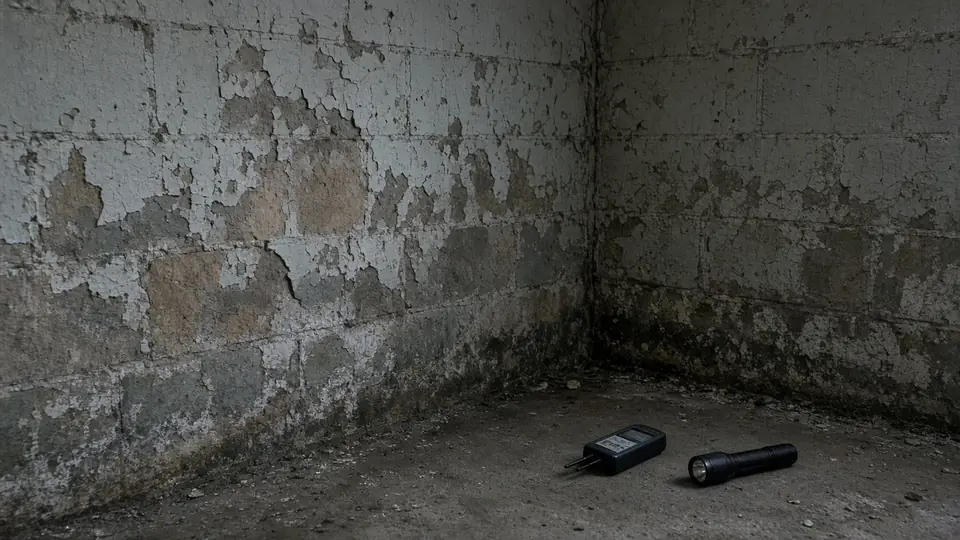
If you rent or are signing a lease, Westchester County's Chapter 581 requires the owner to say whether the property sits in a FEMA flood hazard area. The owner must also disclose known flooding from the past ten years that damaged the rental space. It took effect on 15 August 2022 and reaches leases, sublets and renewals from that date. It is a county law, so it covers a Yonkers lease, and you should ask for the form before you sign.
Owners and buyers can put the same questions to the seller. The county form asks for the flood map panel and zone, so that panel is a sensible place for a buyer to start looking.
The housing here is old and dense, and the median home was built in 1958. Tell the assessor how many units share your basement or wall, because the next room may hold the answer.
The work then splits in three. An assessor writes the plan, a different company carries out the cleanup, and the assessor checks the result. On 10 October 2026 the state mold register listed 8 active assessment contractors and 19 active remediation contractors with Yonkers business addresses. Those are business addresses, not service areas, but the assessment list is the shorter one, so book that step first.
The street
Yonkers built over its own rivers
- 1Street and houses
- 2Concrete flume
- 3Sewer system
- 4Foundation wall
- 5Basement floor
- 6Opened stretch
Three jobs
The three jobs in Yonkers, in order
Three jobs, in order. Pick the one that matches where your building is now: assessing the mold, fixing it to a written plan, or drying water that just came in.
Mold Assessment With the Building's Flood Record
Book the assessor before the tear-out.
Mold Remediation by a Separate Company
Hand the plan to a second, separate company.
Drying After Repeat Water
Dry the room fast and write down the dates.
The corridor
Nearby files
Hudson bank
Saw Mill valley
Basement near the Saw Mill or Nepperhan? You get $100 off your first job in Yonkers, credited by us after the booking is made.