Mold assessment
Same stain, again? Book the assessor before you book a tear-out
$100 off your first job, credited when it is booked.
A contractor quoted a tear-out and nobody asked what happened here last time. Stop there. Book the assessor first, send us the building's dates and papers, and let a written plan decide what comes off the wall.
- 1Dates of earlier water
- 2Where the water came from
- 3Who was told
- 4What was done
We help you get the mold assessment booked first and the cleanup or drying after, from separate New York companies, starting with what this building has been through.
The Yonkers record-first promise
- Calling or writing to us is free and binds you to nothing.
- We ask about the building's flood record before anything else.
- The company that assesses will not be the one that removes.
- Your $100 credit follows the written offer terms, word for word.
Each contractor you hire works for you under your own agreement with them.
Mold Removal Yonkers, (315) 640-3590
Read the termsQuestions
Questions to settle before an assessment
1What separates an assessment from a mold test?
A test counts spores or names a species. An assessment reads moisture, finds the source and writes a plan. The state Health Department does not recommend testing, so ask what the assessor will actually measure.
2What do I get at the end of the visit?
A written plan that names the work areas, the methods, the protective equipment and how the job will be cleared. Where possible it also names the water source. Ask when you will receive it.
3Do I need an assessor for one small patch?
Probably not yet. EPA says most people can clean patches under about ten square feet. Fix the water first. If the patch grows or returns, book the assessor.
4Can I get a removal quote before the assessor visits?
You can ask, but the state Labor Department says removal estimates should wait until an assessment is done. A quote without a plan cannot be compared with any other quote.
5How do I check an assessor's license?
Get the license number in writing, then check it in the Labor Department's mold contractor search. That check is yours to make, because we do not run it for you.
6Can a tenant book the assessment alone?
You can ask us to start the booking, but the building's owner usually has to allow access. Write to your landlord first, say what you plan, and keep a dated copy. Then send us the details.
The file
Four questions this assessment turns on
- 1
Dates of earlier water
Dates tell the assessor whether to hunt for a one-time leak or a source that keeps coming back. Send every date you have, even a rough one tied to a storm you remember.
- 2
Where the water came from
Brook water, a sewer backup and a leaking pipe leave different marks and need different fixes. The assessor looks for the source before writing the scope.
- 3
Who was told
A written notice to a landlord, a seller or the city shows who knew and when. If you rent, ask for the county's flood history form and keep your copy.
- 4
What was done
Receipts and reports from earlier dry-outs show what was already tried. The plan then covers what is left, not what someone has already done.
The drawing
What a wall can tell an assessor
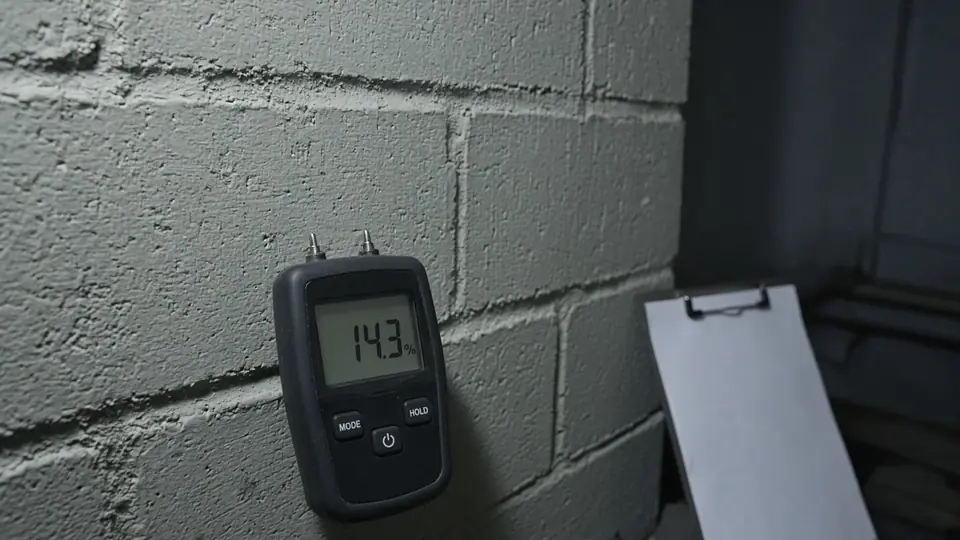
- 1Meter pointsReadings along the wall show where the damp starts and where it stops.
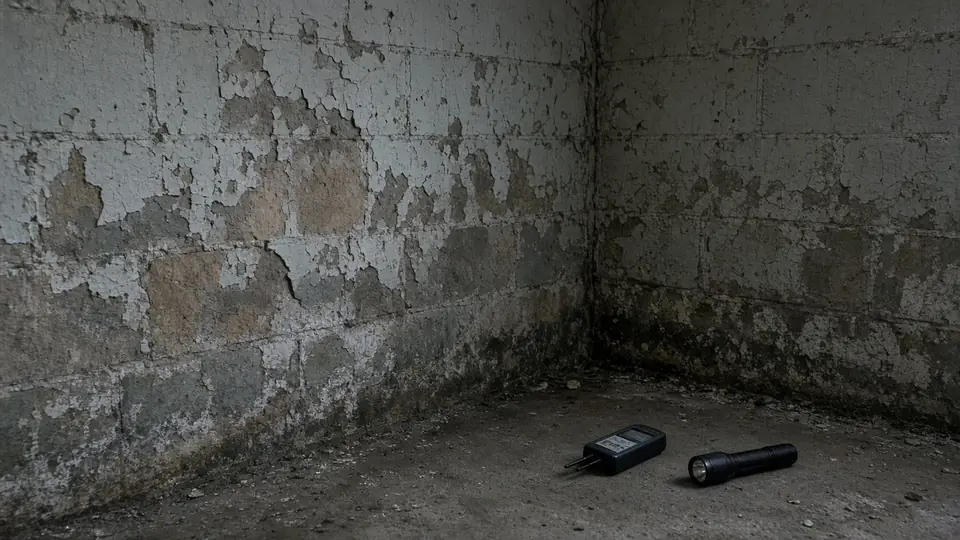
- 2Stain lineA mark partway up the wall can show how high water once reached.
- 3Wall baseThe joint with the floor shows whether water rose from below or seeped in.
Signs
Signs that call for an assessment first
- A stain that returns after paintingPaint hides the mark, not the wet behind it. EPA says do not paint or caulk over mold; clean and dry the surface first.
- A musty smell with no visible sourceSmell often points to damp behind a wall or under a floor. An assessor finds where it starts.
- A landlord who says it was cleanedAsk for the paper from that cleaning. If none exists, the assessor starts from scratch.
- Water after every hard rainRepeat water is a building question first and a mold question second.
- Mold across more than ten square feetAbove that size, New York rules call for an assessor's plan before remediation begins.
Chapter 581
Ask for the flood form before you sign
Westchester County law makes a landlord give a prospective tenant a written flood history for the last ten years.
Scope
What the assessment covers
- Moisture readingsMeters check walls and floors for damp you cannot see.
- A walk-through of the growthThe assessor notes where mold is, how far it reaches and what it sits on.
- The water sourceWhere possible, the plan names where the moisture comes from and who should fix it.
- The written planIt lists the work areas, methods, protective equipment and the tests the finished job must pass.
- The clearance visitAfter the work, the same assessment company checks it against the plan and reports in writing.
Run of work
How the assessment visit runs
- Send the building's detailsGive us the address, what you see, the dates and any photos.
- Book the assessorYour visit is set with an assessment company, and a separate one handles removal later.
- Read the written planCheck that it names the rooms, the method and how the job will be cleared.
- Take the plan to remediatorsAsk each remediation company to price that plan and nothing more.
Where you are
Four steps, in this order
Fresh, clean water changes the order: dry the room first. For mold, follow the order below.
01Get the building's record
Bring the dates and photos the assessor will ask for.
02Book the assessmentThis page
The assessor writes the plan for the building.
03A different company does the work
A second company follows that written plan.
04Clearance after the work
Assessor returns to compare the result with the plan.
What the assessor writes before anyone lifts a tool
The plan is the point of the visit. It tells a remediator which rooms to work in, how, with what protection, and what the finished job must pass. Without it, a quote is a guess.
The plan also names, where possible, the source of the moisture. That is the line you will want when the landlord says it is just condensation. Have the assessor write the source down, and send us a copy.
The quote is already in your hand
If a removal quote has already arrived, it is not too late. The state Labor Department says removal estimates should wait until an assessment is done, and an owner cannot waive the assessment.
Hold the quote, book the assessor, then ask the remediator to price the written plan. If the numbers differ, you will see why.
If you rent, the record starts with your landlord
Westchester County law makes a landlord give a prospective tenant a flood history form before a lease is signed. It covers the last ten years and applies to leases made since 15 August 2022. If you signed earlier, ask anyway.
Compare the form with what you see on the wall. If the stain predates your lease and the form says nothing, tell the assessor and tell us. Keep every message dated.
Who pays for the visit depends on your lease and the cause, and we cannot say who owes it in your case. Put the question to your landlord in writing and keep the reply.
An assessment is a plan, not an air test
State Health Department publication 7287 advises against mold testing and notes that no standard sets an acceptable indoor level. A good assessment looks, measures moisture and writes a plan instead.
The same department says most people do not need an assessor for a small patch. Book one when the growth is large, keeps returning, or the job will pass ten square feet. Choose "mold assessment" on the form when you are ready.
In contract on a house? Skip the air sampling. Ask the seller in writing for the dates of past water and any repair papers, and ask whether an assessor can read the damp wall before you close.
Before the assessor arrives
Clear a path to the wet wall and the floor beside it. Put the dates of earlier water on one page, and bring any papers from earlier repairs, your landlord's messages and the flood form if you were given one.
If you can, be home for the walk-through. Ask to see the meter readings, and ask when the written plan will reach you. Then forward the plan to us before you call a remediator.
Paper
The paper to ask for after an assessment
- The flood history formIf you rent, it comes from the landlord before the lease.
- The assessor's written planIt is the document every later quote is built on.
- Moisture readingsDated numbers show how wet the building was at the start.
- The clearance reportIt comes after the work and shows the plan was met.
Price
What moves the price of an assessment
- How many rooms and walls need a survey
- How hard the area is to reach
- Whether the water source is still active
- Whether records from earlier jobs exist
- How long the written plan needs to be
- Whether clearance is booked as a second visit
Guides
Guides that go with an assessment
The Ten-Year Flood Form
The county form that records ten years of flooding.
Mold Assessor and Remediator
Why one firm cannot find and remove your mold.
Mold Testing
What the state says about mold testing.
Renting With Mold
What a New York renter can ask for, in order.
$100 off your first job, credited when it is booked.